rinsila.digital

EMAIL MARKETING

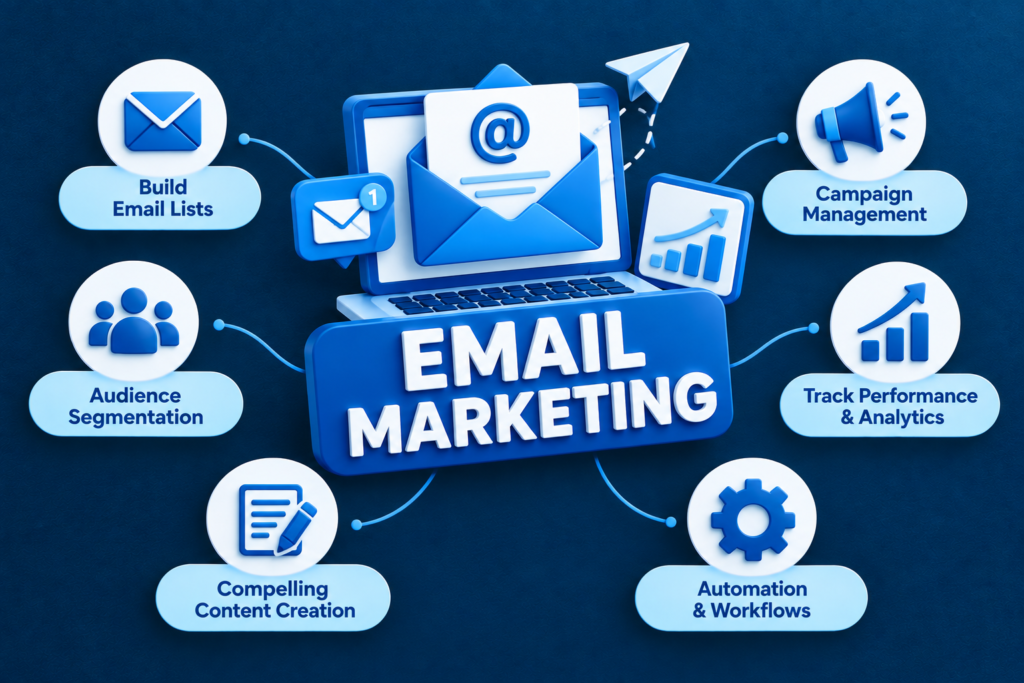
Email marketing is a way for businesses to communicate directly with their audience by sending promotional and informational messages to people who have chosen to subscribe. It is used to build relationships, share news and offers, and encourage actions such as purchases or sign-ups. Because businesses own their email lists and can personalize messages, track results, and automate campaigns, email marketing is one of the most cost-effective and measurable forms of digital marketing.


EMAIL MARKETING SERVICES

Email marketing services are tools and professional offerings that help businesses plan, send, and measure email campaigns. They fall into two groups: software platforms you use yourself, and agency-style services where experts run the campaigns for you.

Core Services Offered

  • Strategy and planning: defining goals, audience, and a content calendar
  • List building and management: sign-up forms, segmentation, and list cleaning
  • Email design and copywriting: templates, mobile-friendly layouts, and persuasive subject lines and body text
  • Campaign management: scheduling, sending, and A/B testing
  • Automation: welcome series, abandoned cart reminders, birthday offers, and re-engagement flows
  • Personalization: content tailored to behavior, interests, or purchase history
  • Analytics and reporting: tracking opens, clicks, conversions, and revenue
  • Deliverability support: keeping emails out of spam through authentication (SPF, DKIM, DMARC) and good sending practices
  • Compliance: ensuring consent and unsubscribe handling meet laws like GDPR and CAN-SPAM

Popular Email Marketing Platforms

  • Mailchimp: beginner-friendly, with templates and a free tier
  • Brevo (formerly Sendinblue): email plus SMS and automation at affordable prices
  • Klaviyo: strong for e-commerce and Shopify stores
  • HubSpot: email combined with a full CRM
  • ActiveCampaign: advanced automation
  • Constant Contact: simple tools for small businesses
  • Zoho Campaigns: good value, especially if you already use Zoho

Features and pricing change often, so check each provider’s current plans.

Who Needs These Services?

  • Small businesses and startups building an audience
  • E-commerce stores recovering lost sales
  • Course creators, bloggers, and coaches
  • Non-profits communicating with donors and volunteers
  • B2B companies nurturing leads

How to Choose a Service

  1. Define your goal: newsletters, sales, lead nurturing, or all three.
  2. Check list size and pricing: many platforms charge by number of contacts.
  3. Look at automation and integrations: does it connect with your website, store, or CRM?
  4. Review reporting tools: you need clear data to improve.
  5. Test ease of use: try a free plan or trial first.
  6. Consider support: especially important if you are new to email marketing.


WHY CHOOSE EMAIL MARKETING

1. You own your audience. Your email list belongs to you. Social media followers depend on algorithms and platform rules, but your subscribers stay reachable no matter what changes elsewhere.

2. Strong return on investment. Email is low-cost compared with ads, and it often delivers a high return, even for small businesses with modest budgets.

3. Direct and personal. Your message goes straight to someone’s inbox, a space they have chosen to share. You can use their name, interests, and past purchases to make each email feel relevant.

4. Highly targeted. Segmentation lets you send different messages to new subscribers, loyal customers, and inactive contacts, so people get content that fits them.

5. Easy to measure. Open rates, clicks, conversions, and revenue show you what works, so you can improve with every campaign.

6. Automation saves time. Welcome series, abandoned cart reminders, and follow-ups run on their own, working for you around the clock.

7. Builds lasting relationships. Regular, useful emails keep your brand familiar and trusted, which turns first-time buyers into repeat customers.

8. Drives action. Emails can lead straight to a purchase, booking, download, or sign-up with a single click.

9. Flexible and scalable. It works for a one-person business or a large company, and you can grow from a few dozen subscribers to hundreds of thousands.

10. Works with other channels. Email supports your website, social media, and SEO by bringing people back to your content and offers.

FAQ

Yes. It remains one of the most cost-effective digital channels because you reach people directly, can personalize messages, and can measure results.


Use sign-up forms on your website, offer a lead magnet (a free guide, discount, or checklist), collect emails at checkout or events, and promote your newsletter on social media.


It’s not recommended. Purchased lists usually lack consent, which can break laws like GDPR and CAN-SPAM, hurt your sender reputation, and lead to spam complaints. Build your own list instead.


It varies by industry and audience, and privacy features on some email apps can inflate open numbers. Focus on trends over time and on clicks and conversions, which are more reliable.


Consistency matters more than frequency. Many businesses send weekly or a few times a month. Watch your unsubscribe rate and engagement to find the right pace.


Keep it clear, specific, and relevant. Avoid misleading claims and all-caps spam triggers. A/B test different versions to see what your audience prefers.