
rinsila.digital

CONTENT MARKETING

Content marketing is a digital marketing strategy that involves creating and sharing valuable, relevant, and engaging content to attract a specific audience and build long-term customer relationships.

It can include blog posts, social media content, videos, infographics, articles, emails, and website content. Instead of directly selling all the time, content marketing provides useful information that helps customers understand a problem, discover solutions, and make informed decisions.
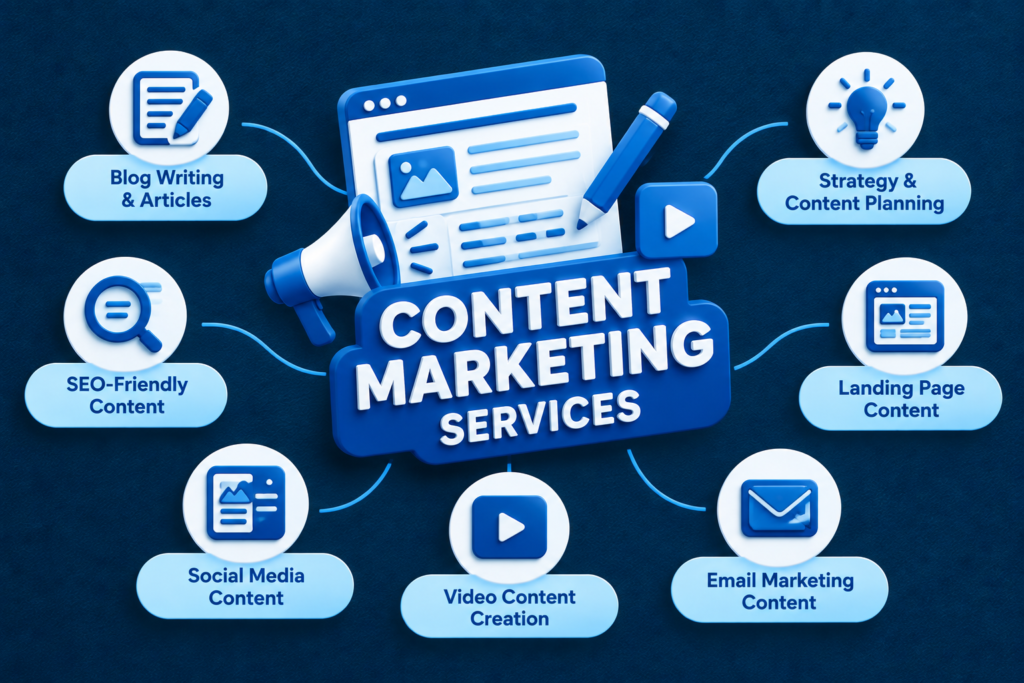
 

CONTENT MARKETING SERVICES

  • Content Strategy – Developing a content plan based on your business goals and target audience.
  • Blog & Article Writing – Creating informative and engaging articles that attract potential customers.
  • Website Content – Writing clear and persuasive content for websites and landing pages.
  • Social Media Content – Creating engaging captions, posts, and creative content for social platforms.
  • SEO Content Writing – Creating search-friendly content using relevant keywords to improve online visibility.
  • Video Content – Developing ideas, scripts, and content concepts for marketing videos.
  • Infographic Content – Presenting useful information in simple and visually engaging formats.
  • Email Content – Creating informative and promotional email campaigns to engage customers.
  • Content Calendar – Planning and organizing content for consistent publishing.
  • Content Performance Analysis – Monitoring content performance and improving the strategy based on results.
 

WHY CHOOSE CONTENT MARKETING

  • It compounds over time. A well-ranked blog post or video can keep bringing in visitors for years without additional spend. Paid ads stop the moment you stop paying.
  • Lower cost per lead. Over the long run, content typically costs less per lead than traditional advertising or paid campaigns.
  • It builds trust. People are more likely to buy from a brand that has already helped them. Useful content positions you as knowledgeable before any sales conversation happens.
  • It attracts people who are already looking. Someone searching “how to fix a leaky tap” or “best CRM for small teams” has intent. Content lets you show up at that moment.
  • It supports the whole customer journey. You can educate people who are just discovering a problem, help those comparing options, and reassure those ready to buy.
  • It’s reusable. One piece of research can become a blog post, a video, social posts, an email series, and a webinar.
  • You own it. Your blog, email list, and website belong to you, unlike social media reach, which depends on platform algorithms.
  • It improves other channels. Good content strengthens SEO, gives sales teams material to share, and makes paid ads and email campaigns perform better.

Things to weigh honestly

  • It’s slow. Most businesses need several months of consistent effort before seeing meaningful results.
  • It requires consistency and quality. Occasional or generic content rarely works.
  • Results can be harder to attribute. Connecting a blog post to a sale months later takes some tracking.
  • It’s crowded in some niches. You’ll need a distinct angle or real expertise to stand out.

When it’s a particularly good fit

  • You sell something people research before buying (software, services, high-value products)
  • You have genuine expertise or a unique perspective to share
  • You want sustainable growth rather than a quick spike
  • Your budget for paid advertising is limited


FAQ

Yes, and you should. A webinar can become a blog post, short video clips, social posts, and an email series. This saves effort and reaches people on different platforms.


In-house gives you better product knowledge and control. Freelancers or agencies add speed and specialized skills. Many teams combine both: strategy in-house, production outsourced.


AI can help with ideas, outlines, and drafts, but content that’s generic or unedited rarely stands out or builds trust. Human expertise, original insight, and fact-checking are what make content worth reading.


  • Publishing without a clear audience or goal
  • Writing about your product instead of your audience’s problems
  • Being inconsistent
  • Not promoting content after publishing
  • Ignoring data and never updating old posts


Yes, but a simple one is enough: define your audience, goals, topics, formats, channels, and how you’ll measure results.


Yes, though standing out takes more effort as the volume of content grows. Original research, real expertise, and a distinct point of view matter more than ever.