rinsila.digital

web development

Web development is the process of building and maintaining websites and web applications, from simple static pages to complex platforms like online stores and social networks.

It is usually divided into front-end development, which covers everything users see and interact with in their browser using HTML, CSS, and JavaScript, and back-end development, which handles the server-side logic, databases, and data processing that make a site work behind the scenes.

Developers who do both are called full-stack developers. Along the way, they use tools such as databases, APIs, version control, and hosting services, and they pay attention to security, performance, and accessibility.

Depending on the project, a site can be coded by hand, built with frameworks, or created using platforms like WordPress, Shopify, or no-code builders such as Wix.
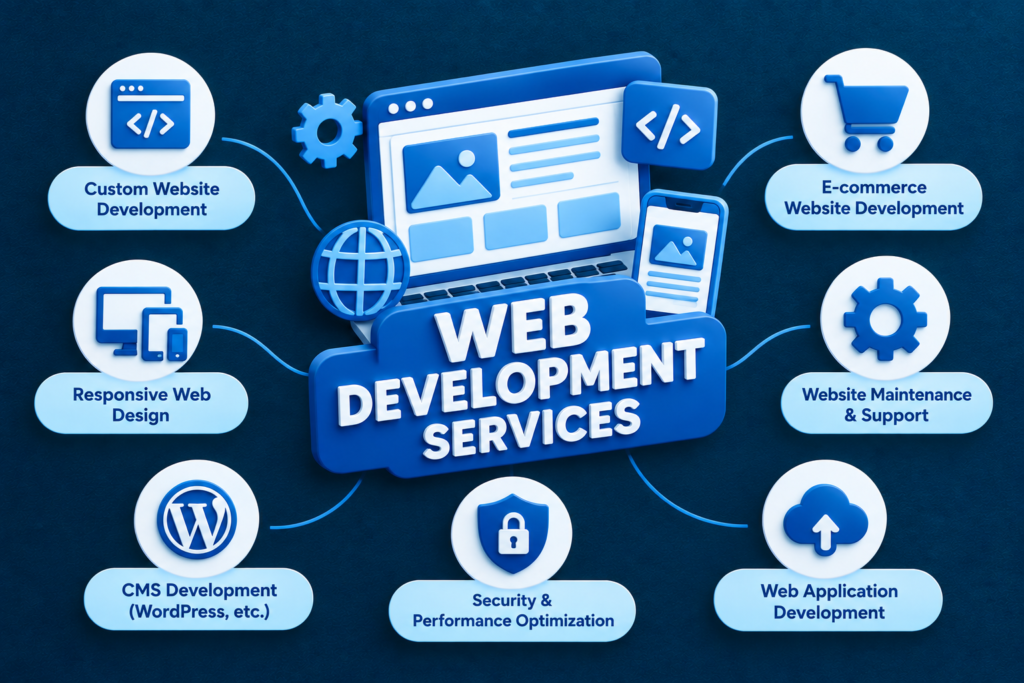
 

WEB DEVELPOMENT SERVICES

Web development services are professional offerings from freelancers, agencies, or in-house teams that design, build, launch, and maintain websites and web applications for businesses and individuals.

Core Services

  • Custom website development: Tailor-made sites built from scratch to match your brand, goals, and audience.
  • Front-end development: Responsive, fast, user-friendly interfaces using HTML, CSS, JavaScript, and frameworks like React, Vue, or Angular.
  • Back-end development: Server logic, databases, user authentication, and integrations using technologies such as Node.js, Python, PHP, or Java.
  • Full-stack development: End-to-end building of both the visible site and the systems behind it.
  • Web application development: Dashboards, customer portals, booking systems, SaaS products, and other interactive tools.
  • E-commerce development: Online stores on Shopify, WooCommerce, Magento, or custom platforms, including product catalogs, carts, and payment gateways.
  • CMS development: Sites built on WordPress, Drupal, or headless CMS setups so your team can update content easily.
  • UI/UX design: Wireframes, prototypes, and visual design focused on usability and conversions.
  • Website redesign and migration: Modernizing outdated sites or moving them to new platforms without losing traffic or data.

Supporting Services

  • API development and third-party integrations: Connecting your site to payment systems, CRMs, email tools, and other software.
  • Mobile responsiveness and progressive web apps (PWAs): Making sites work smoothly on all devices.
  • SEO-friendly development: Clean code, fast load times, and structure that helps search rankings.
  • Performance optimization: Faster loading, caching, and image optimization.
  • Security and compliance: SSL, secure coding, data protection, and privacy requirements.
  • Hosting, deployment, and domain setup
  • Maintenance and support: Updates, bug fixes, backups, monitoring, and ongoing improvements.
  • Content and marketing support: Blog setup, landing pages, analytics, and tracking, which ties in with content marketing.

Typical Process

  1. Discovery: Goals, audience, features, budget, and timeline.
  2. Planning: Sitemap, wireframes, and technology choices.
  3. Design: Visual mockups and prototypes.
  4. Development: Building front end, back end, and integrations.
  5. Testing: Checking functionality, devices, browsers, speed, and security.
  6. Launch: Deploying the site live.
  7. Maintenance: Ongoing support and improvements.

How to Choose a Provider

  • Review their portfolio and case studies.
  • Check client reviews and references.
  • Confirm they have experience in your type of project.
  • Ask about timelines, pricing structure, and communication.
  • Clarify who owns the code and content after delivery.
  • Make sure post-launch support is available.

Factors That Affect Cost

  • Number of pages and features
  • Custom design versus templates
  • E-commerce or complex functionality
  • Third-party integrations
  • Content creation needs
  • Ongoing maintenance requirements


web devlopment

WHY CHOOSE PROFESSIONAL WEB DEVOLOPMENT

1. Strong demand. Almost every business, school, hospital, and government needs a web presence, so skilled developers are hired across nearly every industry.

2. Low barrier to entry. You can start with a laptop, a browser, and free resources. HTML, CSS, and JavaScript are enough to build and publish something real within weeks, and many people succeed without a formal degree if they have a solid portfolio.

3. Good earning potential. Salaries are competitive and grow with experience and specialization. Freelancing and remote work are also common, so you can work for clients worldwide.

4. Creativity and logic together. You design how things look and feel, and you solve technical problems behind the scenes. It suits people who enjoy both.

5. Instant, visible results. You write code, refresh the page, and see the outcome. That feedback loop makes learning motivating.

6. Many career paths. You can specialize in front-end (user interface), back-end (servers and databases), or full-stack. Skills also carry over to mobile apps, e-commerce, cloud, and AI-powered products.

7. Entrepreneurship. If you can build websites, you can launch your own product, store, or blog without hiring a developer.

8. Constant growth. The field keeps evolving, with new frameworks, tools, and ideas, so there’s always something new to learn. The flip side is that you need to keep learning.

9. Work that reaches people. A website or web app can serve thousands or millions of users, so a small team can have a big impact.

A fair caveat: the entry-level market can be competitive, and the tools change quickly. People who build real projects and keep learning tend to do best.

FAQ


Web development is the process of designing, building, and maintaining websites. It includes the look of the site (design), how it works (coding), and how it performs on mobile devices, so your business can be found and trusted online.

The cost of web development depends on the type of website, number of pages, design, and features such as payment gateway or booking system. Contact me with your requirements for a clear quote.


Yes. I provide ongoing support, including updates, backups, security, and changes, so your website stays fast and secure.


Yes. Websites can be built on WordPress, so you can edit text, images, and products yourself without any coding knowledge.


Basic on-page SEO is included, such as clean code, fast loading speed, proper headings, and a search-friendly structure. SEO-friendly web development helps search engines understand and rank your website.


My web development services include business websites, e-commerce stores, blogs, portfolio websites, and landing pages, all designed around your business goals.